


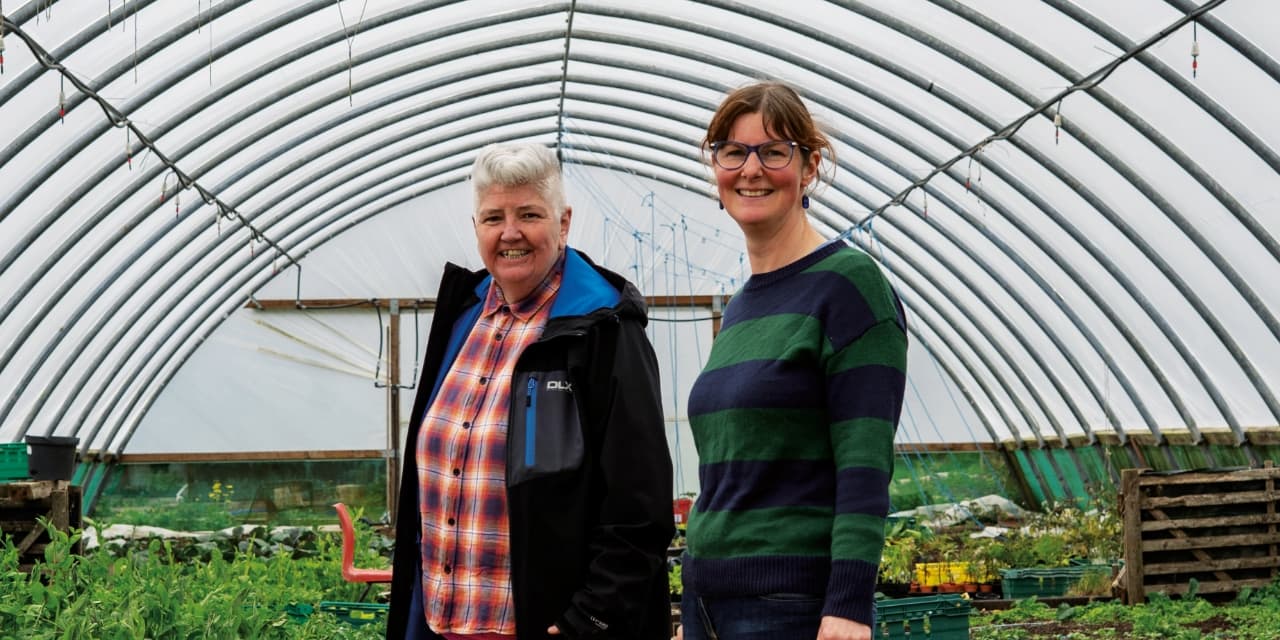
Huffty McHugh and Jill Heslop believe that everyone should have access to outdoor space and nutritious fresh food, wherever they come from and whatever their background.
Huffty, 59, centre coordinator at The West End Women and Girls Centre in Elswick, has been championing the rights of women and girls in this community since 1994. While delivering soup during the Covid-19 pandemic, she realised how many people from the area did not have access to fresh food or outdoor space.
“During one of the lockdowns, I took soup to a family of 11 in a flat in Benwell with no outdoor space at all,” she says. “I rang Jill and said ‘You know what we need, a farm!’”
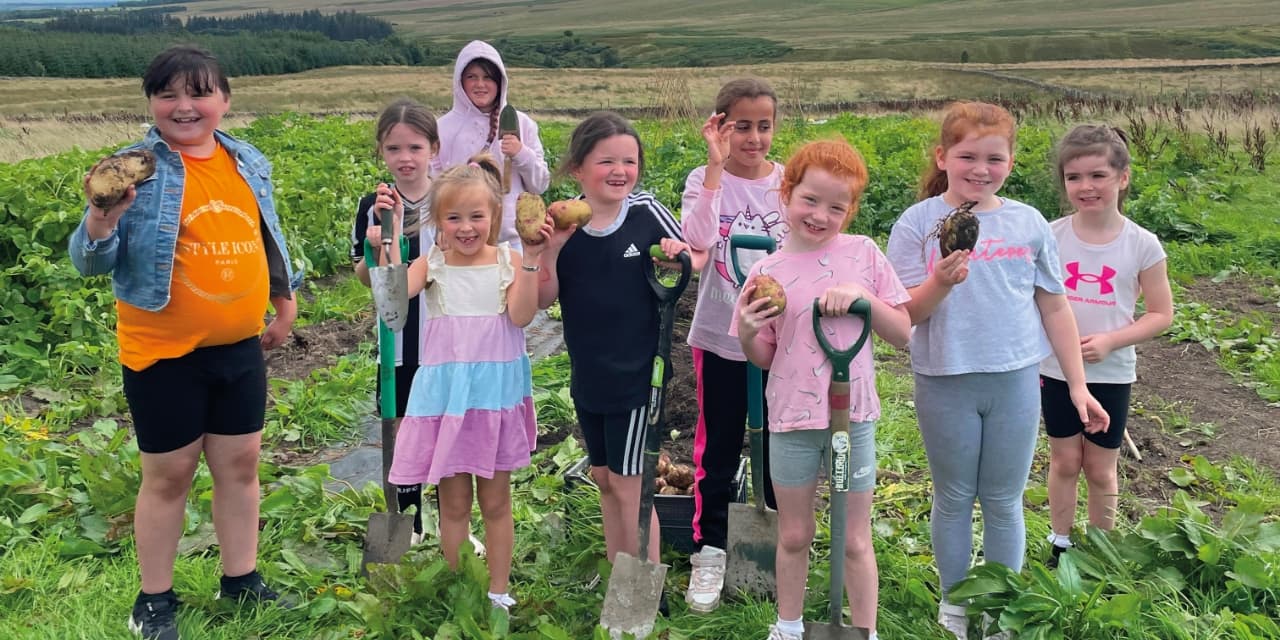
Since 2021, Huffty and Jill have welcomed thousands of women and girls to their farm in rural Northumberland. Every Tuesday and Thursday, just after school drop-off time, a minibus leaves Elswick and brings groups to the farm, where they learn to work the land, raise animals, grow their own food and share recipes.
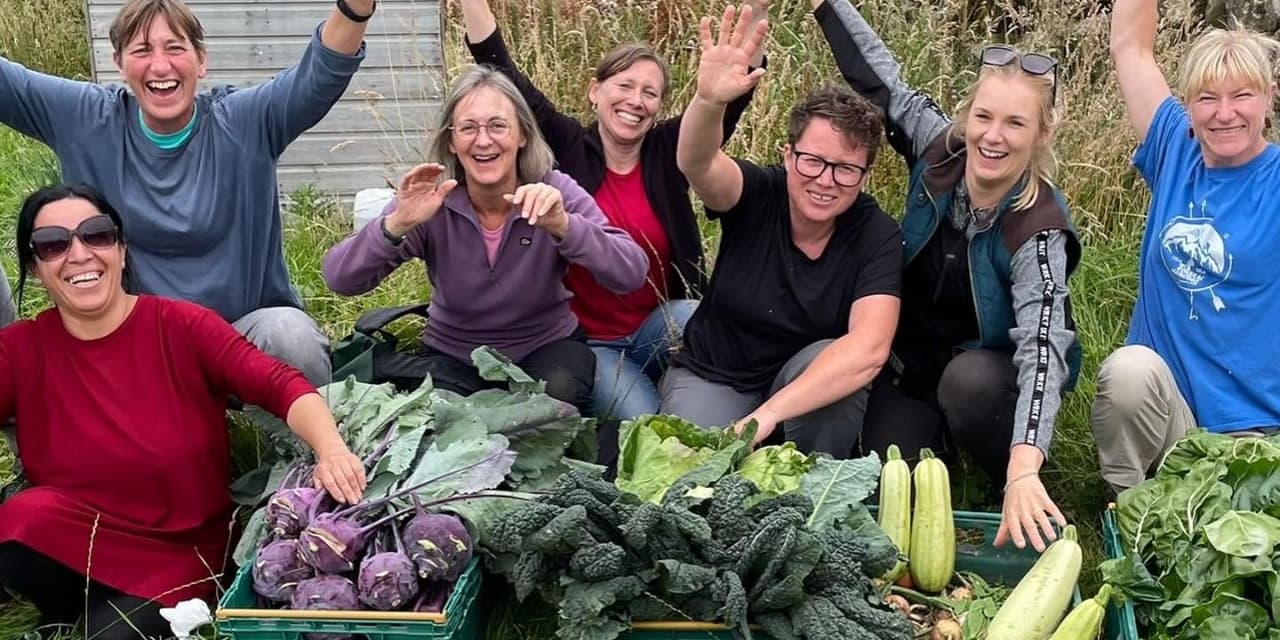
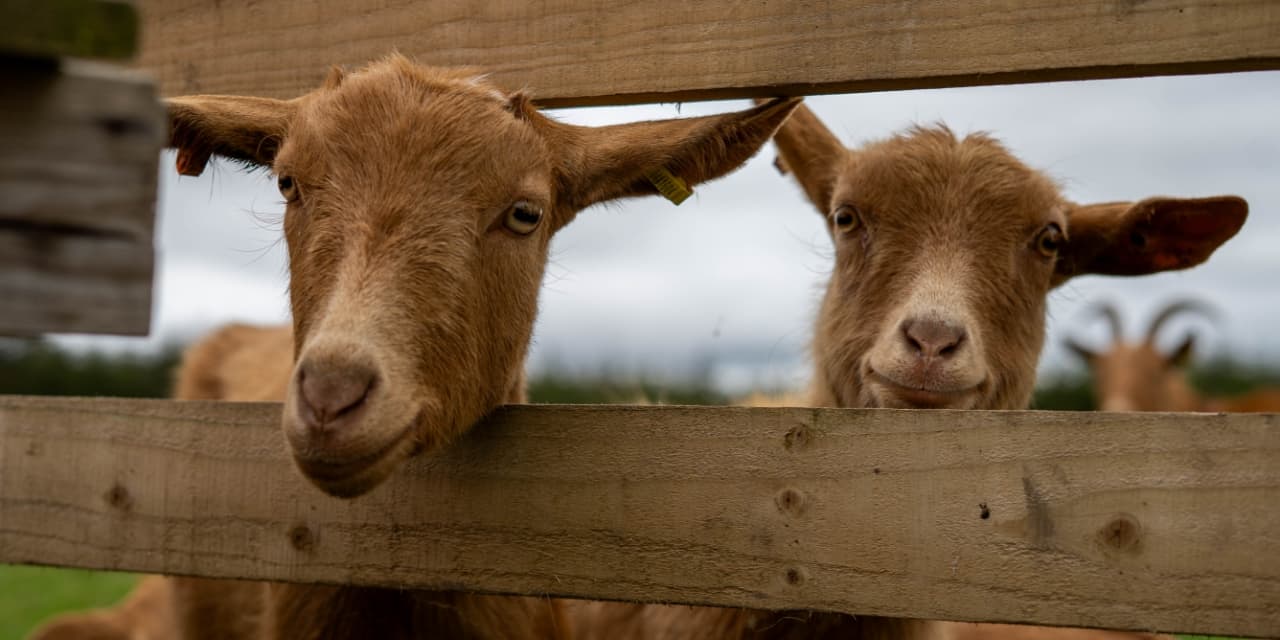
They are currently growing rhubarb, onions, garlic, potatoes, broad beans and peas alongside cauliflower, cabbage and broccoli, and carrots, parsnips and turnips. Pumpkins are planned for the autumn, with spinach and kale to be planted soon. There is also a herd of friendly goats roaming in the field. A dairy building is under construction, where the goats’ milk will soon be able to be pasteurised.
Friendships are formed here, while barriers are broken down, and the benefits are felt throughout the community as the fresh produce grown on the farm is made freely available to everyone in Elswick via the community centre.
The West End Women and Girls Centre was established in 1981, when Elswick was full of working men’s clubs but had nowhere for women to go. The groups proved popular, but when Huffty joined the team she was interested in finding out why the women from Elswick’s resident Bengali population weren’t coming to the centre.
“We started knocking on doors on the Jubilee Estate to find out why,” she says. “There was so much racism in Elswick at that time, the Bengali families were having rubbish thrown at them, bricks put through their windows, it was really tough.”
Conversations revealed that many of the women were passionate about gardening and cooking.
“We already had a small garden at the centre, but the Bengali women were growing herbs like coriander that we’d never thought to grow. One lady from Sylhet in Bangladesh offered us some seeds from her hometown to grow, and that was where the connections started to develop.
“We were very successful in the community garden, grew lots of fruit and veg, then distributed it in the community. We did a lot of work with the estate matriarchs, taking over derelict bits of land and planting them with edible landscapes. There are apple trees, raspberries and strawberries, and the dream was that kids could walk to school and pick an apple off a tree or a strawberry off a plant to eat.”
The local primary school even rang Huffty and told her something had changed in the playground, mothers from different ethnic groups who had never interacted before had started talking. “The school told me they were all making friends, and said it was thanks to the girls’ club,” she says. “All we were doing was gardening and cookery!”
Farm development manager Jill, 43, started out doing creative art projects for The West End Women and Girls Centre. She grew up on a farm in rural Northumberland and had some idea of how the land was managed, so when Huffty came up with the idea of finding a farm she started looking for viable pieces of farmland that didn’t seem to be occupied.
Call it luck or serendipity, but a piece of farmland on the Wallington Estate, owned by the National Trust, happened to be available.
In an even more curious twist of fate, representatives from the National Trust told Jill and Huffty that Sir Charles Trevelyan, the previous owner of the estate, had left a clause in his will requesting that they keep a connection with the Elswick area, where he had been an MP. Conversations with women at the centre revealed that Lady Trevellyan had even taken a group of 116 girls from Elswick to live on the estate for the duration of the Second World War, an act of kindness that many of their grandmothers remembered.
The National Trust was keen for The West End Women and Girls Centre to put the farm to good use and agreed a 20-year lease. The lease also stipulated that someone would have to live on the farm, so Jill decided to move there with her young family. The old stone farmhouse that they now call home is off-grid, three miles down a bumpy farm track and powered by a single wind turbine.
“The remoteness doesn’t bother me at all because I was brought up somewhere really remote, so I’m used to this,” says Jill. “I’m just really happy that girls from Elswick are getting to experience what I did growing up.”
Across the 10-acre farm there is a herd of sheep, a hen house, and beehives where the women gather heather honey. Edible hedgerows have been planted with wild roses, rose hips, elder and blackthorn for sloes. A 30-metre polytunnel provides shelter for salad leaves like chard and rocket to grow year-round, alongside tomatoes and an olive tree.
“The girls have real ownership of it. They call it ‘our farm’,” says Huffty. “When we open the doors of the minibus the juniors come skipping out, picking up hens and cuddling lambs, it’s everything we ever wanted.”
On Fridays at the centre in Elswick there’s a cookery group led by community gardener Shiren Abdullah, where they cook fresh produce brought down from the farm. All the recipes are vegetarian so women of all cultures and religions can share the food.
Shiren joined the centre when she moved to the UK from Kurdistan 15 years ago. She speaks five languages, acting as a translator for women who come to the centre without any English skills and encouraging them to learn while they garden together.
“Last week we got loads of bread buns from Greggs, who donate food to the centre too,” says Huffty. “We had lots of root veg and eggs from the farm, and I told Shiren we needed to use it all. She came up with a recipe for the most delicious veggie burgers. Everyone was asking how to make them so we typed up the recipe, translated it into different languages, and distributed it in the community along with the root vegetables.”
Wheat and oats are also grown on the farm then harvested, threshed and milled by hand, before Shiren uses the flour to make flatbreads over an open fire with groups.
At the heart of the farm project is what the group has named their Feminist Food System. “It came from the social justice programme at Newcastle University,” says Jill. “We realised the work we’re doing here is quite unique in the UK and food links into many different types of justice – social, environmental, economic, and health.
“We’re producing more than six tonnes of fresh produce every year, and all of that is being given back to the community in Elswick, where a lot of people don’t have access to nutritious food. That’s improving health as well as fighting the cost of living crisis.
“Food is a really special way into looking at environmental justice too,” adds Jill. “You can look at growing food on a small-scale farm or a community garden, and it feeds into everything else. The food miles are drastically lower, and no chemicals are being used so there’s a positive impact on the environment too.”
The community centre and farm are largely funded by corporate donations, grants and lottery funding, which Jill spends time researching and applying for when she’s not hard at work on the farm.
Ryder Architecture recently provided the plans to convert three old agricultural buildings into a bunkhouse with a big community kitchen, and the space will allow more families to visit during the school holidays.
Meanwhile, Huffty, who has a season ticket for Newcastle United, discovered the man next to her at a match worked for Kier Construction. The business was keen to help and has provided builders and materials for the barn conversion project, as well as encouraging subcontractors to support it.
Across the farm and community centre there are now 10 full-time staff working alongside a dedicated team of volunteers, all of whom have been supported by the centre themselves and understand the challenges faced by women from the area.
For the residents of Elswick, the social benefits are numerous. “Food is just a lovely way of bringing people together,” says Jill. “The farming sessions always end with us sitting and eating together before everyone goes back on the minibus.”
What the people who are part of the West End Women and Girls Farm take back to Elswick is not just fresh nutritious produce, but a sense of community and friendship that is felt far beyond the farm gates.
For more information visit www.westendwomenandgirls.co.uk