

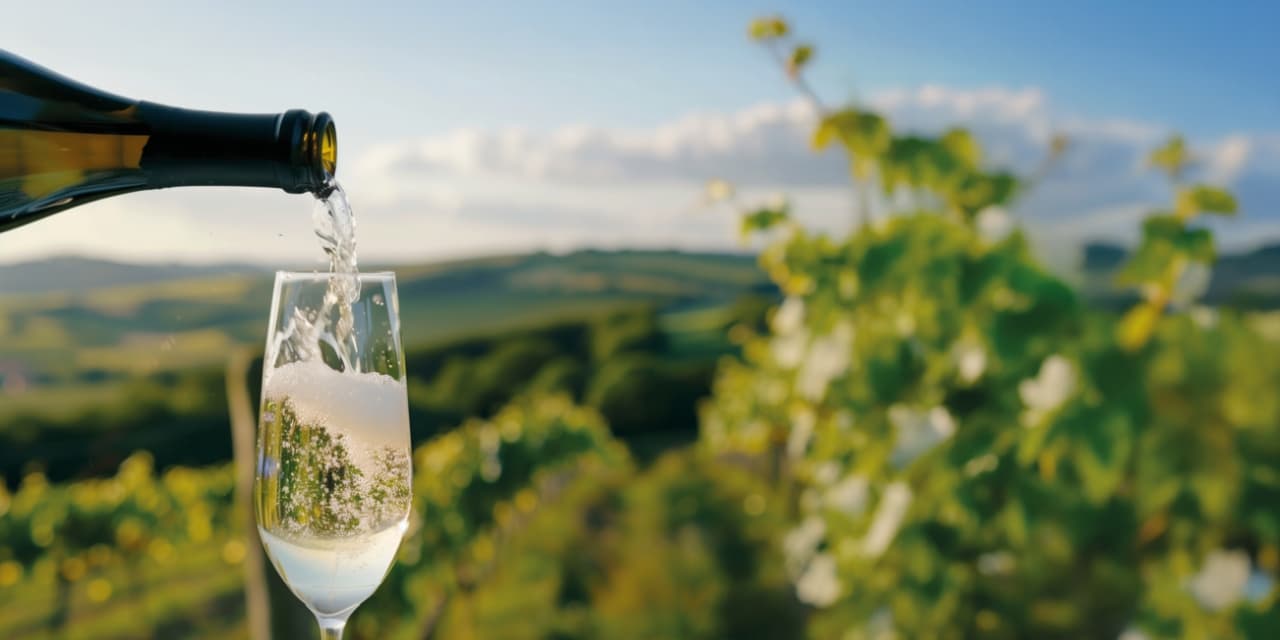
Newcastle Wine School owner David Harker tells the story of English sparkling wine. Once dismissed as a hobby for amateur farmers playing at winemaking, today it is a success story 50 years in the making
In 1976, Concorde took to the skies on its maiden commercial flight. In the same year, the first commercial quantities of traditional method English sparkling wines were produced.
It’s fair to say that sparkling wine production didn’t exactly take off, and by the mid-80s you might find bottles of Lamberhurst and Carr Taylor but not much else.
It took two pioneering Americans to shake things up. Stuart and Sandy Moss – the original owners of Nyetimber – believed that it was possible to craft quality English sparkling wine from traditional Champagne grapes grown in England. That was despite the advice of consultants, who said planting Chardonnay and Pinot Noir in England was bonkers.
Nyetimber Classic Cuvée launched in 1996 and within 12 months it was selected for the late Queen’s Golden Anniversary lunch. In 2009, the Italian Bollicine del Mondo sparkling wine competition selected Nyetimber Classic Cuvée 2003 as the best sparkling wine in the world – and English sparkling wine had arrived.
Grape vines need warmth and sunshine to fully ripen – two qualities not usually associated with England.
Except, to make traditional method sparkling wine, yeast and sugar are added to a bottle of still wine to spark a second fermentation. When that second fermentation in bottle is complete, a further dosage of sugar may be added. The taste of all this additional sugar won’t be obvious if the initial base wine is high in acidity – think lemon juice and sugar on a pancake. To ensure a suitably acidic base wine, it is necessary to use slightly under ripe grapes. These grapes can be grown in a cool climate such as that found in Champagne in northern France, or just across The Channel in the southern counties of England such as Kent, Sussex and Hampshire which boast the same chalk soils as Champagne.
When it comes to growing grapes for making sparkling wine, the English climate may be suitable but it’s not perfect. The English weather is, at best, uncertain. The risk of spring frosts and summer rain make harvests unpredictable. Factor in high land and labour costs and you have a young industry predicated on: a small and variable volume of production, high unit costs, a product that requires years of ageing before release, and a highly competitive market. Not a proposition to have the investors on Dragon’s Den dancing.
Not long after the first plantings at Nyetimber, Mike Roberts established Ridgeview Winery in East Sussex – a project exclusively dedicated to making quality sparkling wine from the classic Champagne grape varieties.
For 30 years, Ridgeview has produced award-winning wines named after areas of London – including Grosvener Blanc de Blancs and Knightsbridge Blanc de Noirs. In October 2025, after reporting a £1.5million loss for 2023, Ridgeview went into administration. The business is still trading and hoping to find a buyer.
Whatever the risks, French wine producers have noted the world-class potential of English sparkling wine.
Champagne houses Duval-Leroy and Billecart-Salmon flirted with investing in England, but it was Taittinger that took the plunge. In partnership with English distributors, Taittinger launched Evremond in 2014, releasing the first wine made on the estate in 2024. Taittinger has been followed by Champagne Vranken-Pommery and international investors from South Africa, California, and Monaco.
What then is the current state of the nation?
The English sparkling wine industry continues to grow. There are now more than 1,000 vineyards and around 240 wineries. Most of the wine produced (70%) is sparkling – almost all of which is made by the traditional method. The classic Champagne varieties of Chardonnay, Pinot Noir and Meunière are the most planted grape varieties, accounting for almost 80% of all plantings.
It is however a small industry compared to Champagne. English wine production is around 10million bottles per year, compared to 300million in Champagne. Unlike Champagne, the UK industry is heavily dependent on the domestic market, with less than 10% exported. More than half of all Champagne produced is destined for export. England is dominated by 24 large producers, who account for almost 90% of sales.
The biggest challenge facing producers is that they continue to produce more than they sell. As in Champagne, established English producers have, over the years, built a library of back vintages. This allows them to eradicate annual vintage variation by producing multi-vintage blends.
As the industry matures, the local knowledge base grows. This developing expertise is supported by institutions such as Plumpton College – the UK’s centre of excellence for wine education – which celebrates its centenary this year.
One sign of a maturing industry was the registration of Sussex as a wine Protected Designation of Origin in 2022. The proponents argued that a Sussex PDO would protect quality and promote the reputation of Sussex sparkling wine, while critics warned a PDO was premature for a national industry yet to establish a clear identity.
Champagne is a place, a product, and a brand. There isn’t yet the single word that so neatly sums up the value proposition of English and Welsh sparkling wine. Attempts have been made to find one – Britagne is one suggestion, and Merretage another – inspired by Christopher Merret, the 17th Century Englishman credited as the first person to start a second fermentation in bottle by adding sugar. I favour Brit Pop as a catchy name for a fun fizz, though I don’t expect it will catch on.
The low yields and high production costs of English sparkling wine require a luxury price tag. The good news is that the quality of the wines made today justify the price. So, treat yourself, raise a glass and in honour of those early pioneers, cry “God for Harry, England, St George, and sparkling wine.”
The Wine List
Ridgeview Bloomsbury, Sussex – Waitrose, £35
Nyetimber, Sussex – Majestic, £43
Hundred Hills, Oxford – District, Whitley Bay, £50
Gusbourne Estate Brut Reserve, Kent – Carruthers & Kent, £55
Classy sparkling wine from the traditional Champagne varieties
Silverhand Estate, Kent – Crush, Durham, £13 by the glass
Champagne varieties grown on chalk soils in Kent

David Harker’s journey in wine has seen him progress from complete novice to a Wine & Spirit Education Trust Diploma-certified wine educator, accredited Bordeaux and Sherry wine educator, Spanish Wine Scholar and – in a We Bought a Zoo moment – wine school owner. To explore Newcastle Wine School’s events, tastings and courses visit www.localwineschool.com/newcastle