

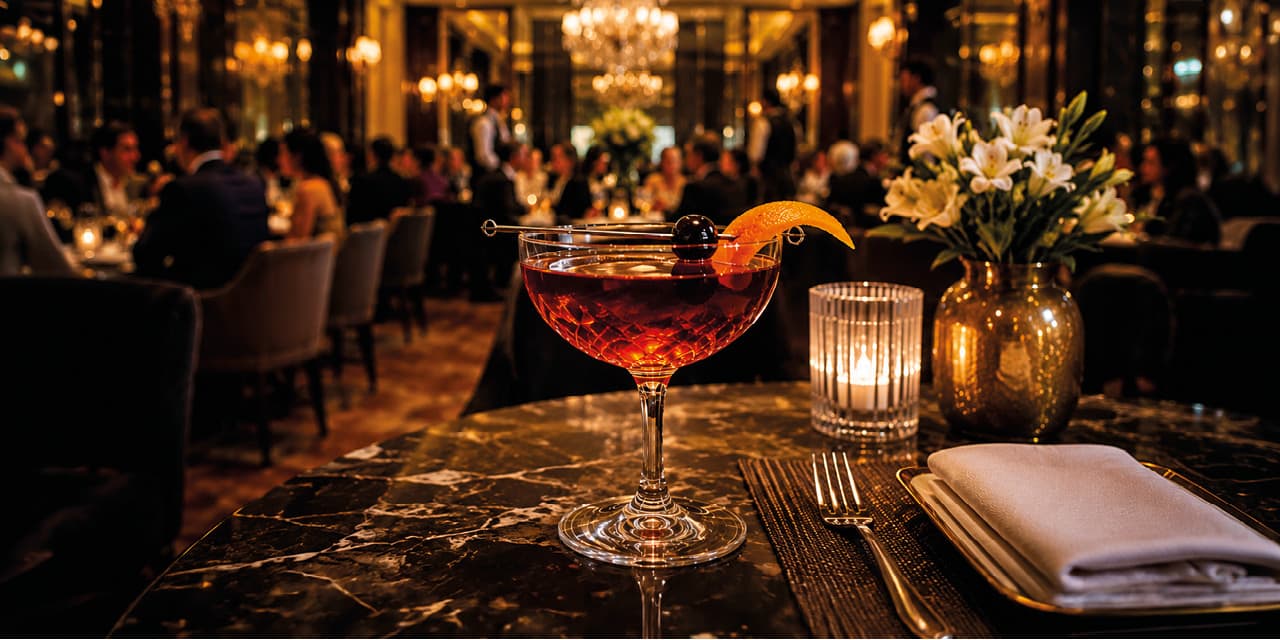
My earliest memory of vermouth is of a dusty bottle of Martini Rosso at the back of my grandparents’ drinks cabinet, lost somewhere between the sherry and the snowballs; one of those mysterious bottles that like Santa Claus, brussels and holiday adverts only appeared at Christmas. Times have changed. Sprouts are now served as leaves with pancetta and artisan vermouth is a trendy apéritif.
Put simply, vermouth is an ‘aromatised wine’ fortified with distilled alcohol. The production process varies from producer to producer but typically starts with a base wine which, depending upon the desired style, may be sweetened. Neutral spirit is then added to raise the alcohol level to between 15% and 20%. This fortified wine is then infused with herbs, roots and spices until the botanical flavourings have been absorbed.
Vermouth traces its origins to the medicinal drinks prepared by ancient civilisations from fermenting grape juice infused with herbs and spices. The name vermouth derives from the French pronunciation of the German word wermut for wormwood. Wormwood is a bitter herb once used in the treatment of stomach disorders and is the same ingredient as used to make absinthe; it is potentially toxic, so it’s used sparingly in modern artisanal vermouths.
While vermouth was historically used for medicinal purposes, the modern version first appeared in 18th-century Turin. In the 1750s the Cinzano brothers were producing a sweet, red vermouth enjoyed by the royal court of the House of Savoy. Turin distiller Antonio Benedetto Carpano then commercialised its production in 1786, and the apéritif quickly became popular in fashionable café society. Today’s top-selling international brand, Martini, was founded in Turin in 1863.
If Italy is the spiritual home of sweet red vermouth, then France is home to the dry white style. Pioneering herbalist Joseph Noilly developed Noilly Prat, France’s first vermouth, in 1813. A few years later and 250 miles to the north in the alpine town of Chambéry, distiller Joseph Chavasse created a white vermouth based on a local recipe of meadow plants, flowers and wormwood. Vermouth de Chambéry has the distinction of being the only protected designation of origin for vermouth in France.
Vermouth holds a special place in the cultural life of Spain. Vermouth hour – “la hora del vermut” – is the traditional time to kick back with friends and enjoy a glass of sweet vermouth, served cold with a slice of orange and a plate of salty snacks, before heading out to lunch. Spanish vermouth originated in Catalonia but soon spread across the country taking advantage of local ingredients. In Andalucía for example, the base wine is often sherry.
Closer to home, England has a burgeoning vermouth scene. Just as European vermouth has developed using local and historically important ingredients, English vermouth takes advantage of domestic wine production and an abundance of botanicals. Denbies is England’s largest single-estate vineyard. Their orange vermouth has been made in part from pressings of the award-winning Orange Solaris wine blended over several months with a secret recipe of botanicals and herbs.
At the other end of the scale, Vault Aperitivo started life in the vault under the stairs of Sharon and Dan Joines’ London home. Over the past 10 years Vault has grown from humble beginnings producing vermouth exclusively for the neighbourhood Italian restaurant, to today being poured in some of the UK’s finest restaurants and bars.
Whether it’s aperitivo time or la hora de vermut, you’re in cold Turin nipping into a crowded café to escape the rain or sitting in the sun outside a sleepy Spanish bar, bitter sweet vermouth is a drink for all seasons.
Just remember that because it is wine, vermouth will eventually oxidise and spoil after opening. Keep opened bottles tightly sealed in the refrigerator and use within six weeks. A lesson my grandparents never learned.
The Wine List
Levi Serafino Bianco Vermouth di Arneis – Produced by the historic Levi Serafino Distillery, a Vermouth di Torino Superiore made from local Arneis white wine enriched with Piedmontese herbal extracts, aromatic spices and a touch of Grappa – Carruthers & Kent, £42.99
Nito – From the hills of Catalonia with a bitter twist from a Torinese herb recipe – District, by the glass or bottle £35.00
La Fuerza Vermouth Blanco – Argentinian vermouth based on Torrontés grapes blended with over 30 different botanicals local to Mendoza and the Andes – Online The Good Spirits Co., £25.25
Denbies Orange Vermouth – Online Denbies, £26.00
Vault Aperitivo – The Cook House/Wren by the glass, Online Vault Aperitivo, £35.00

David Harker’s journey in wine has seen him progress from complete novice to a Wine & Spirit Education Trust Diploma-certified wine educator, accredited Bordeaux and Sherry wine educator, Spanish Wine Scholar and – in a We Bought a Zoo moment – wine school owner. To explore Newcastle Wine School’s events, tastings and courses visit www.localwineschool.com/newcastle